

Blog
Oxidative Stress

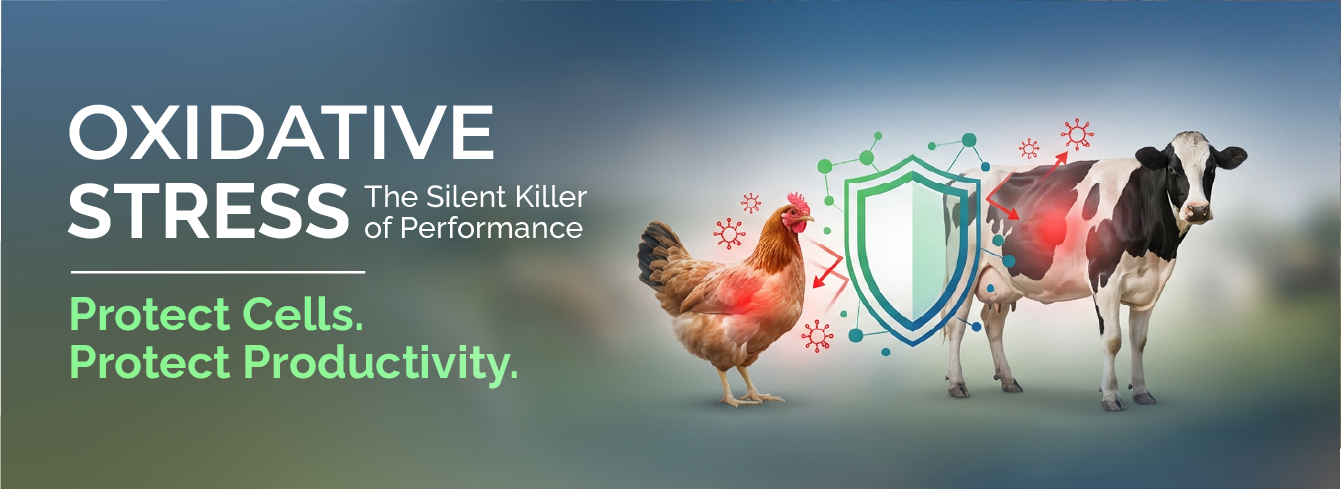
Oxidative Stress: Silent Killer
In modern poultry and livestock farming, oxidative stress emerges as a silent killer devastating productivity across species. Cellular ROS imbalance arises when reactive oxygen species production exceeds antioxidant defenses, particularly in broilers under heat stress above 28°C, high stocking density, rapid growth rates, and poor feed quality; ruminants face identical cellular ROS imbalance during peak lactation, rumen acidosis, and transition periods. This cellular ROS imbalance originates from normal metabolism turning destructive, silently eroding performance in both poultry flocks and high-producing herds.
Farmers encounter cellular ROS imbalance daily as free radicals accumulate without warning signs initially. High metabolic demands in broilers mirror lactation stress in dairy cows, amplifying cellular ROS imbalance until intervention becomes essential; proactive recognition separates profitable operations from struggling ones.
How Cellular Damage Unfolds
Inside poultry mitochondria, cellular ROS imbalance initiates at the electron transport chain where oxygen accepts excess electrons, forming superoxide anion (O₂⁻-) primarily at complexes I and III. Amine oxidases generate hydrogen peroxide (H₂O₂) during neurotransmitter breakdown, while peroxisomal β-oxidation contributes additional ROS species. Ruminant rumen epithelial cells experience parallel cellular ROS imbalance from volatile fatty acid fermentation via xanthine oxidase activity during high-concentrate feeding.
The primary defense system activates immediately: cytosolic SOD1 and mitochondrial SOD2 catalyze 2O₂⁻- + 2H⁺ → H₂O₂ + O₂ conversion, followed by catalase in peroxisomes (2H₂O₂ → 2H₂O + O₂) and selenium-dependent glutathione peroxidase (H₂O₂ + 2GSH → GSSG + 2H₂O). Cellular ROS imbalance disrupts this equilibrium when ROS generation surpasses detoxification capacity, allowing H₂O₂ buildup and transformation into hydroxyl radical (- OH) through the Fenton reaction: Fe²⁺ + H₂O₂ → Fe³⁺ + – OH + OH⁻.
This – OH radical unleashes devastating chain reactions characteristic of cellular ROS imbalance: lipid peroxidation attacks polyunsaturated fatty acids in poultry muscle membranes (PUFA → lipid radical → peroxyl radical → malondialdehyde + 4-hydroxynonenal toxins), while ruminant mammary epithelial cells suffer protein carbonylation, nitration, and DNA strand breaks (8-oxo-dG lesions). Tissue-level consequences of cellular ROS imbalance include mitochondrial ATP depletion in poultry liver and tight junction disruption in ruminant rumen epithelium via NF-κB pathway activation.
Recognizing the Warning Signs
Poultry reveals cellular ROS imbalance through persistent panting with open mouths and spread wings even at moderate 23-25°C temperatures, 20-40% feed intake reduction without diarrhea or vomiting, unnatural clustering in cool corners displaying lethargic calm. Layers produce randomly cracked thin shells unlike uniform calcium deficiency patterns; broilers yield pale soft exudative meat slipping from hands with metallic odor. Ruminants manifest cellular ROS imbalance via reduced rumen motility, ketonic breath during early lactation, and swollen mammary glands without fever or purulent discharge. Pathognomonic diagnostics confirm cellular ROS imbalance definitively: TBARS exceeding 2 nmol/g malondialdehyde in meat or plasma, glutathione below 1.5 mmol/L, depressed SOD/GPx activities with elevated CRP minus leukocytosis. Poultry responds within 48 hours to antioxidant therapy; ruminants normalize milk yield rapidly. Respiratory conditions feature nasal/ocular secretions absent here; gastrointestinal issues show bloody/mucoid stools; viral infections present high fever; cellular ROS imbalance uniquely lacks infectious markers, persists at moderate temperatures, responds swiftly to Vitamin E/C supplementation.
ADEMIXvet Targeted Solutions
ADEMIXvet delivers SELEN E-20 (liquid: Vitamin E 200g/L + Se 900mg/L) where Vitamin E binds PUFA membranes blocking peroxyl radical chains (ROO- + Vit E → ROOH + Vit E-), Selenium activates GPx (2GSH + H₂O₂ → GSSG + 2H₂O); E.S MIX W.S (powder: Vit E 20mg/g + Se 0.45mg/g) integrates into premixes protecting mitochondrial SOD2. Dosage: poultry 500ml/1000L water 3-5 days, ruminants 20-25ml/L water; both combat cellular ROS imbalance effectively.
C MIX 100 (Vitamin C 100g/100ml) regenerates oxidized Vitamin E radicals while scavenging – OH through Fenton inhibition; ADECK-VIT synergizes Vitamin E 50g + C 25g halting ROS propagation cascades in plasma and cell membranes (poultry 500ml/1000L, ruminants 10ml/100kg bodyweight). OXISTOP BHT premix (110g BHT/kg) terminates feed fat peroxidation chains preventing PUFA degradation to MDA, essential at 125g/ton final feed safeguarding premix vitamins from thermal breakdown and ensuring comprehensive cellular ROS imbalance prevention.
Secure Your Profits Today
Oxidative stress is no longer a theoretical concept; it is a daily, invisible enemy silently eroding performance in both poultry and ruminants through relentless cellular ROS imbalance. By understanding how free radicals damage mitochondria, membranes, and critical tissues before any obvious clinical signs appear, producers can move from reacting to problems toward preventing them. Persistent panting, thin shells, reduced feed intake, ketotic breath, and swollen glands signal advanced cellular ROS imbalance requiring immediate intervention. Targeted antioxidant strategies restore balance and performance across species.
Visit the ADEMIXvet products page today to discover complete solutions eliminating cellular ROS imbalance and protecting profitability in poultry and ruminants.
Be our agent now; partner with ADEMIXvet for exclusive access to scientifically proven oxidative stress management programs and unbeatable market support.
