

Blog
Poultry mycotoxin management

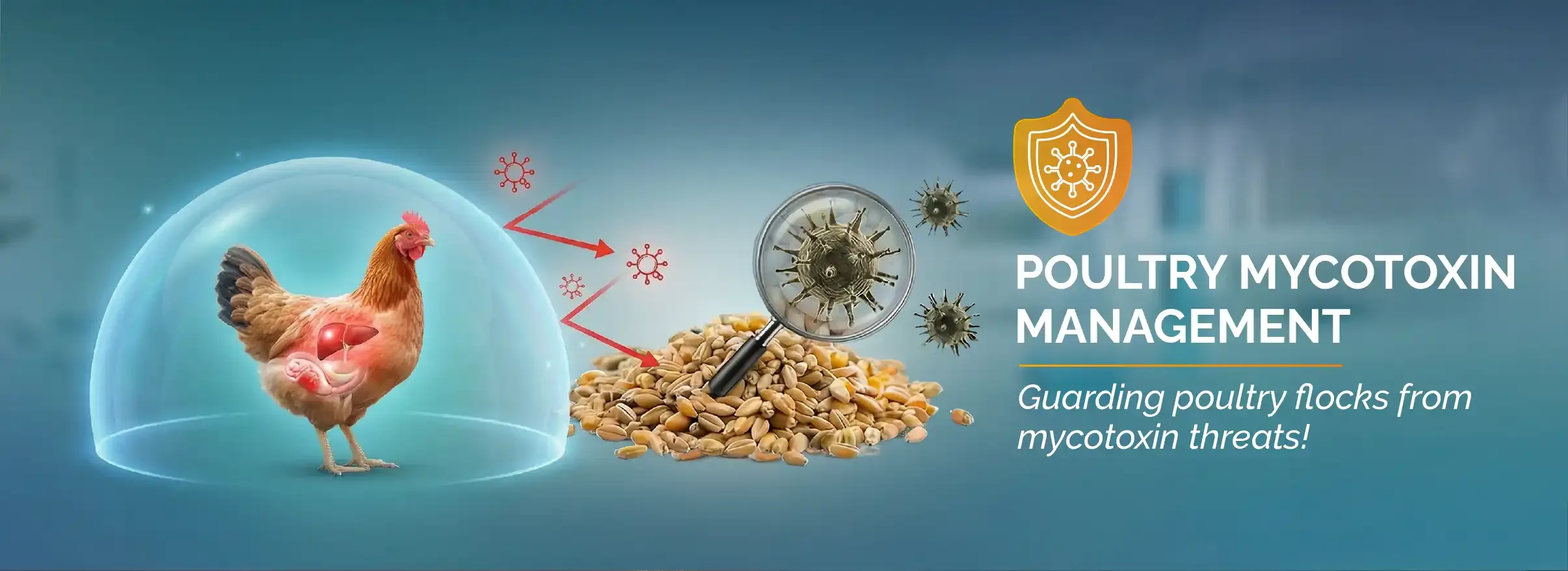
Guarding poultry flocks from mycotoxin threats
Poultry mycotoxin management has become a critical pillar of modern poultry production, especially in hot climates where feed ingredients are constantly exposed to heat and humidity. Poultry mycotoxin management is essential because mycotoxins are not a single toxin or a single disease, but a large family of toxic metabolites produced by different fungi on grains and raw materials. Corn, soybean meal, and wheat can all carry invisible contamination that slowly damages liver, kidneys, and immunity without any obvious mold on the feed. For many farmers, the first signs appear as poor performance, uneven body weights, weak response to vaccines, or unexplained mortality long before they connect it to mycotoxins. In this context, Poultry mycotoxin management is not just a laboratory concept; it is a daily on-farm strategy to protect birds from one of the most underestimated threats in the poultry industry.
From field fungi to toxins inside the bird
The story of mycotoxin damage starts long before the feed reaches the farm, which is why smart Poultry mycotoxin management looks at the full chain from field to feeder. Fungi can infect crops in the field during periods of stress, drought, or excessive rain, and then continue growing during transport and storage if temperature and humidity are not controlled. Once contaminated feed is delivered to the farm, mycotoxins survive pelleting and processing, and they start to interact with the bird’s gut, liver, and kidneys from the very first day. At the intestinal level, poor Poultry mycotoxin management allows toxins such as aflatoxins, ochratoxins, zearalenone, and fumonisins to damage the gut barrier, reduce nutrient absorption, and weaken local immunity. As exposure continues, the liver struggles to detoxify these compounds, while the kidneys work under constant stress to excrete them, especially in hot weather when birds are already dehydrated. Without a clear plan for Poultry mycotoxin management, the toxin load silently builds up in the flock until performance and health collapse.
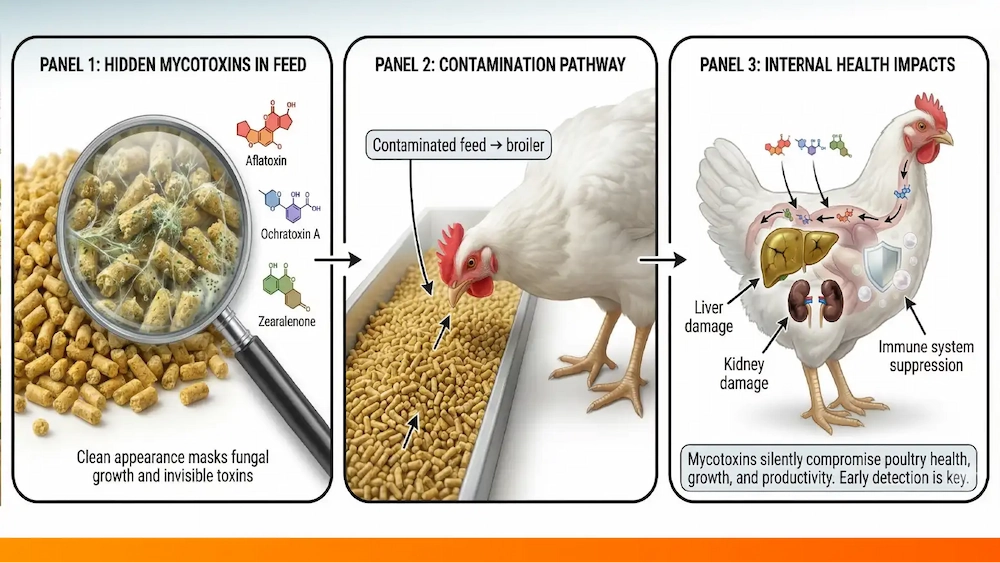
How mycotoxins quietly destroy profitability
From a financial perspective, the economic impact of weak Poultry mycotoxin management is far bigger than most producers expect. Even moderate levels of mycotoxins can reduce growth by 10–20%, increase feed conversion ratio, and lead to uneven flocks that are difficult to market efficiently. In broilers, poor Poultry mycotoxin management often results in more condemnations at the slaughterhouse, lower carcass yield, and higher mortality rates that eat directly into farm profits. In breeders and layers, mycotoxins can reduce egg production, compromise shell quality, and lower fertility and hatchability, extending the economic damage over many weeks or even months. On top of this, farms with inadequate Poultry mycotoxin management spend more on medications, see weaker vaccine performance, and suffer more secondary bacterial outbreaks because the immune system is constantly depressed. When all these direct and indirect losses are combined, it becomes clear that strong Poultry mycotoxin management is a strategic investment rather than an extra cost.
Building a proactive shield against mycotoxins
Effective Poultry mycotoxin management starts with controlling the predisposing factors that allow toxins to enter and accumulate in the first place. Basic but powerful steps include buying feed and raw materials from trusted suppliers, avoiding long storage periods, and keeping silos and warehouses dry, cool, and well-ventilated. On the farm, good Poultry mycotoxin management means checking for clumping, heating, or musty odors in feed, which often signal high moisture and potential fungal activity. Regular laboratory testing during high-risk seasons supports data-driven Poultry mycotoxin management, helping producers adjust their detox programs to real contamination levels. In parallel, the use of scientifically formulated mycotoxin binders and detoxifiers in the diet becomes a core tool of Poultry mycotoxin management, reducing toxin absorption, supporting liver and kidney function, and protecting the immune system. When these preventive measures are combined, they transform Poultry mycotoxin management from a reactive response into a proactive shield for the flock.
Turning Poultry mycotoxin management into a smart profit tool
When we connect all these elements, Poultry mycotoxin management clearly emerges as a full strategy that covers feed hygiene, toxin binding, organ protection, and metabolic support. Farms that take Poultry mycotoxin management seriously see more consistent growth, stronger immunity, and far fewer surprises during high-risk seasons. Within the ADEMIXvet portfolio, OCHRIMIX acts as a biological mycotoxin detox support, combining yeast derivatives and hepatoprotective components to shield liver and kidneys under toxin pressure. ANTIMOLD works at feed level, lowering pH and inhibiting mold growth to keep raw materials cleaner before mycotoxins are even formed. VIOMIN provides targeted vitamin–mineral support to stabilize metabolism and immunity when Poultry mycotoxin management programs are under stress. TOXSTS PLUS (as a feed additive) and ADETOX-S (as a potent anti-mycotoxin solution) reinforce Poultry mycotoxin management by binding a broad spectrum of toxins and reducing their bioavailability in the gut. To learn how these tools can be tailored to your own Poultry mycotoxin management strategy, visit our website, explore the ADEMIXvet blog and full poultry portfolio, and contact us to Be Our Agent in your region.
