
Blog
When Layer Houses Start Losing Eggs: How Calcium and Phosphorus Imbalance Silently Drains Profits

From Traditional Layer Houses to High Output Egg Factories
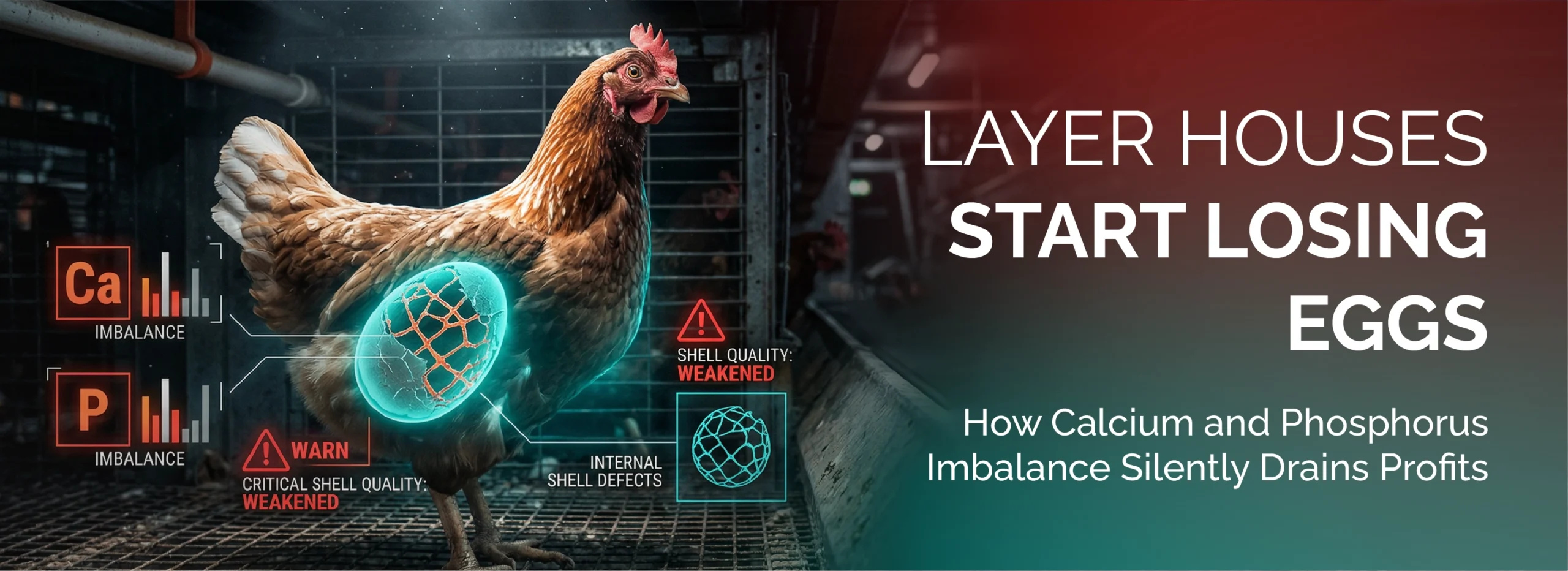
Modern layer houses are no longer simple sheds; they are high output egg factories where every hen is expected to deliver consistent performance for many months. The layer bird constantly shifts calcium and phosphorus from the diet and from its own bones to build a strong eggshell every single day. When a Layer calcium and phosphorus deficiency begins, this delicate balance is disturbed, and the first warning sign is often a slow but steady decline in egg numbers and shell quality rather than an obvious sudden crisis.
What Happens When Calcium and Phosphorus Fall Out of Balance?
The earliest visible consequence of a Layer calcium and phosphorus deficiency is poor shell quality, with thin shells, rough shells, misshapen eggs and a higher percentage of cracked eggs on the belts and in the nests. As the Layer calcium and phosphorus deficiency persists, birds start showing leg weakness, difficulty in movement and even fractures in the bones, especially during peak production when the demand for minerals is highest. The real cost is not only fewer eggs, but also the higher proportion of eggs that cannot be sold because they break, are downgraded or are rejected in the table egg or hatchery market. At this stage many producers try to correct the situation by adding more calcium to the feed in an unplanned way, without addressing the root causes of the Layer calcium and phosphorus deficiency inside the house.
The Role of Trace Minerals in Shell Strength and Bone Health
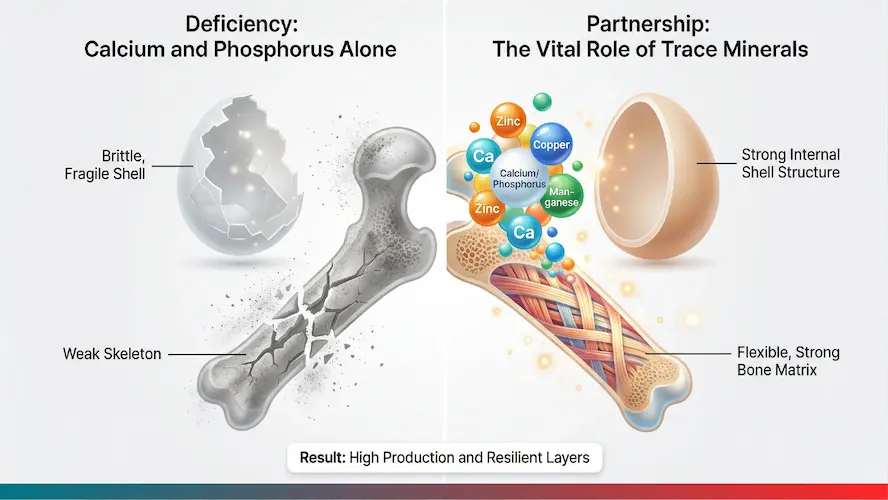
Focusing only on calcium and phosphorus levels in the feed can be misleading, because trace minerals such as zinc, manganese and copper are essential partners in building a strong skeleton and shell. When a Layer calcium and phosphorus deficiency is combined with low or imbalanced trace mineral supply, the enzymes responsible for bone formation and shell deposition do not work efficiently. Zinc and manganese are involved in the formation of matrix proteins that give the shell its internal structure, while copper supports collagen synthesis that gives bones strength and flexibility at the same time. Without these trace minerals, the impact of a Layer calcium and phosphorus deficiency goes deeper than just a fragile shell, it also affects immune competence and the ability of the bird to sustain high production for a long laying cycle.
Hidden Management and Diagnostic Errors that Mislead Producers
In many farms, the feed formula on paper looks perfect, yet the birds still suffer from a practical Layer calcium and phosphorus deficiency because of hidden management issues. Segregation of feed ingredients in silos, uneven feed distribution, poor access to feeders or drinkers, and reduced feed and water intake during heat stress can all turn theoretical mineral levels into real on farm shortages. At the same time, some clinical signs may resemble viral or respiratory diseases, such as a sudden drop in egg production, scattered mortality and general weakness, which pushes the producer toward a wrong diagnosis and unnecessary vaccines or antibiotics. This confusion between infectious diseases and a nutritional Layer calcium and phosphorus deficiency wastes time and money and delays the corrective actions that would restore mineral balance and shell quality.
Why Layer Houses Need Smart Mineral Support
Intensive layer operations cannot afford trial and error, because every production day has a direct impact on profitability and flock longevity, and any unmanaged Layer calcium and phosphorus deficiency becomes a long-term source of broken eggs, weak birds and shortened laying cycles. The answer is not to throw random calcium sources into the diet, but to implement smart mineral support programs that provide a balanced supply of calcium, phosphorus and key trace minerals in highly available forms, especially at the onset of lay and during periods of stress. In the next article, we will explore how targeted mineral solutions from ADEMIXvet can help layer houses strengthen shell quality, stabilize production and protect the economic potential of every flock.