
Blog
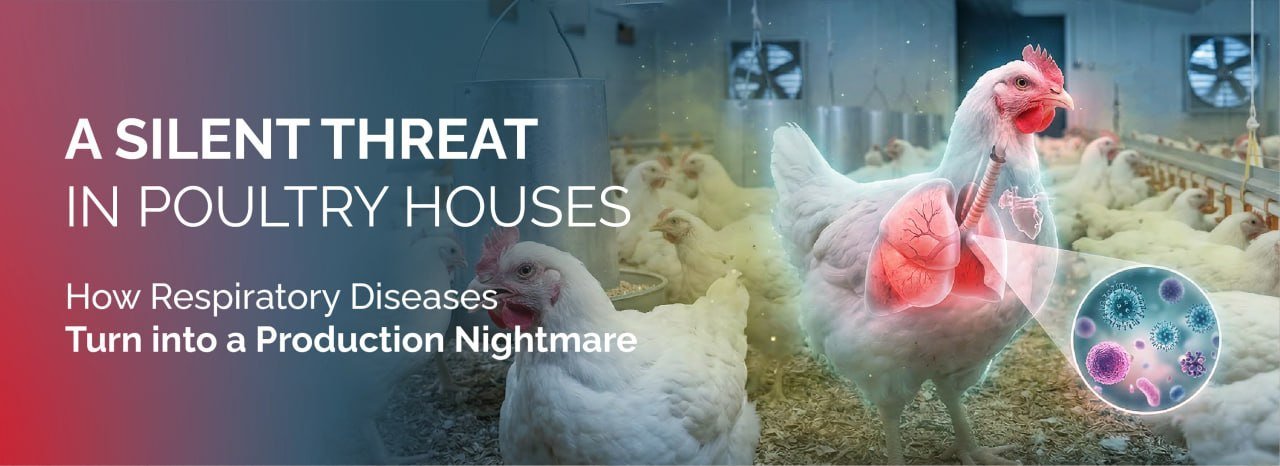
A Silent Threat in Poultry Houses: How Respiratory Diseases Turn into a Production Nightmare

From Traditional Farm to Live Protein Factory
Over the past half century, poultry production has shifted from simple backyard farming to an intensive industry where the bird is treated as a live protein factory that converts plant-based feed into meat, eggs and chicks. In the late seventies, a broiler needed more than 4.5 kg of feed to reach an average body weight of about 1.8 kg in a 45-day production cycle, and although Poultry Respiratory Disease existed at that time, its impact was generally less severe than what we face today. With the introduction of modern breeding programs, a major genetic improvement in poultry has been achieved, making birds grow faster and utilize feed more efficiently, but this genetic progress has also increased the sensitivity of the modern broiler to Poultry Respiratory Disease due to the continuous pressure on the respiratory and immune systems inside intensive houses.
The Price of Rapid Genetic Progress
Today, a broiler can reach around 2.0 kg body weight with less than 3.25 kg of feed in fewer than 35 days, which is a remarkable achievement for the poultry industry. This success is largely driven by genetic progress in poultry that focused on rapid growth and improved feed conversion, while the immune and respiratory systems did not always receive the same level of improvement. As a result, any Poultry Respiratory Disease entering the house is facing a bird with very high productive potential but a relatively narrow immune safety margin, which makes Poultry Respiratory Disease capable of causing sudden mortality or significant performance losses in a short time. In addition, intensive stocking density, high dust load, suboptimal ventilation, ammonia accumulation and continuous production cycles all create ideal conditions for the spread and persistence of viral and bacterial agents responsible for Poultry Respiratory Disease even in farms applying good hygiene and disinfection programs.
When Vaccination Alone Is Not Enough
As respiratory viruses in poultry have become more aggressive and diverse, producers have adopted complex vaccination programs that include live and inactivated vaccines designed to control the main causes of Poultry Respiratory Disease such as Newcastle disease and infectious bronchitis. However, many field observations report respiratory outbreaks after vaccination, giving the impression of vaccine failure in protecting flocks from Poultry Respiratory Disease. In reality, multiple factors can explain this apparent failure, including breaks in the cold chain, improper storage, incorrect dilution, exposure of vaccines to disinfectants, sunlight or high temperatures, and errors in application routes, all of which reduce vaccine effectiveness against Poultry Respiratory Disease. Moreover, vaccinating birds that are already stressed by heat, poor nutrition, mycotoxins, concurrent infections or uneven body weight leads to weak immune responses that cannot fully protect the flock, allowing field strains to circulate and trigger clinical or subclinical Poultry Respiratory Disease despite the presence of a written vaccination plan.
The Role of Immune Modulators in Flock Protection
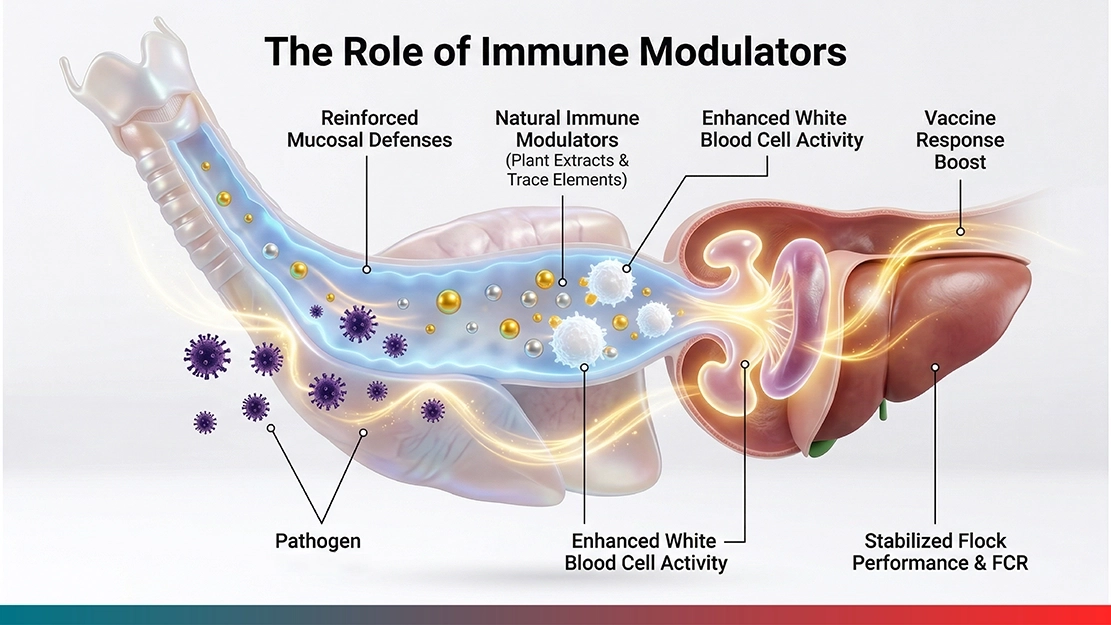
Given this complex reality, relying on vaccination alone is no longer enough to secure flocks against recurrent waves of Poultry Respiratory Disease throughout the year. Natural immune modulators have become an essential part of integrated health programs, as they support the immune system, improve vaccine response and help birds cope better with respiratory challenges associated with Poultry Respiratory Disease under high production pressure. Well-designed formulations containing plant extracts, antioxidants, trace elements and functional nutrients can enhance the activity and number of white blood cells, reinforce mucosal defenses in the respiratory tract and limit the negative impact of Poultry Respiratory Disease on feed intake, growth and feed conversion. When these immune boosters are used strategically around vaccination periods, they can reduce post vaccine reactions, stabilize flock performance and help producers maintain more consistent results in the presence of circulating respiratory pathogens.
A New Line of Defense for Poultry Producers
The challenge of respiratory diseases in poultry houses is now a permanent reality driven by genetic progress, high productivity, evolving field viruses and multiple environmental stressors that all favor pathogen circulation. The smartest step for modern poultry producers is to stay closely connected with technical experts and follow the latest nutritional and immune support solutions provided by ADEMIXvet through its official channels, as each improvement in respiratory health management can translate into higher final weights, lower mortality and better economic returns per cycle. We invite you to keep following our articles and products for up to date scientific solutions and to contact us to become an ADEMIXvet partner in your area, so together we can face the viral and especially respiratory threats that endanger your flocks every day.