
Blog
When the Kidneys Fail in Silence… Hidden Poultry Renal Damage that Steals Your Flock Performance

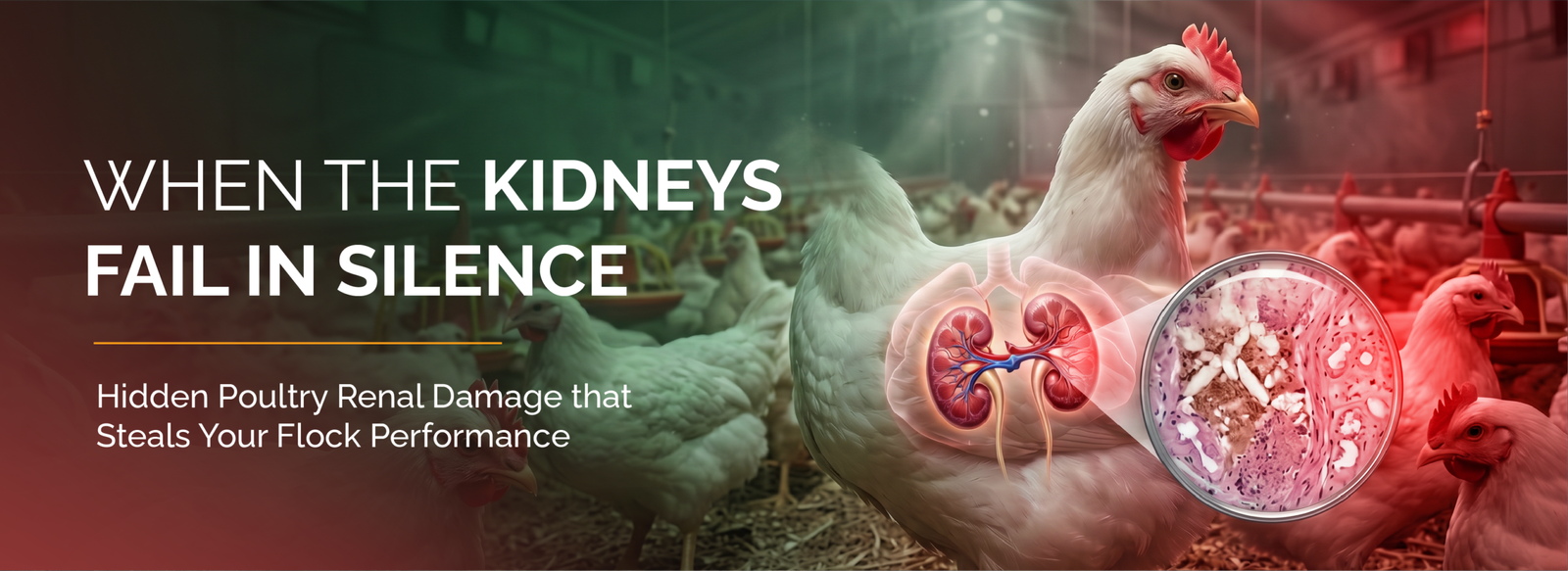
The overlooked role of the kidneys in modern poultry farms
In many poultry discussions, the focus is on lungs, gut and immune system, while the kidneys quietly work in the background every single day. The avian kidney is responsible for excreting uric acid, balancing water and electrolytes and clearing many metabolic wastes and drug residues from the body. When this system is under pressure, the bird may not show dramatic signs at first, yet feed efficiency drops, growth slows and mortality can creep up in a way that looks like a management or infectious problem rather than a renal one. Silent damage to the kidneys reduces the margin of safety for the whole flock and makes birds more vulnerable to any additional challenge, which is why poultry renal health support is becoming a critical piece of modern flock management.
How heat stress quietly damages the kidneys
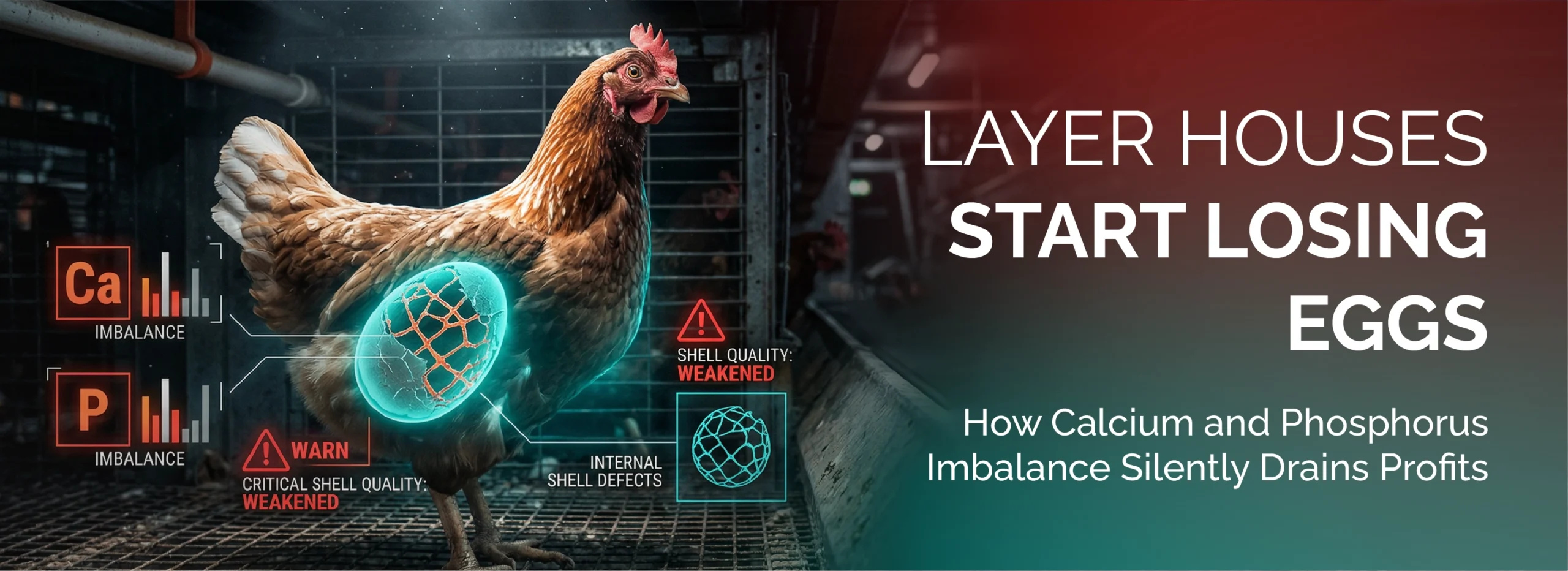
Heat stress is one of the most underestimated enemies of kidney function in poultry, especially in hot climates and poorly ventilated houses. Under chronic or acute heat, birds drink more but often eat less, experience dehydration at the tissue level and show changes in blood flow that compromises renal perfusion. Experimental studies have shown that heat stress increases markers of kidney damage, elevates uric acid and can lead to structural lesions and even fibrosis in renal tissue of broilers and layers. Over time, this leads to urate deposits and visceral gout, with white chalky material appearing on organs at necropsy and unexplained mortality in the flock. In these situations, improving house climate is essential, yet the kidneys themselves also need poultry renal health support to cope with the oxidative stress and high excretory load generated by heat.
When massive antibiotic use turns into a renal burden
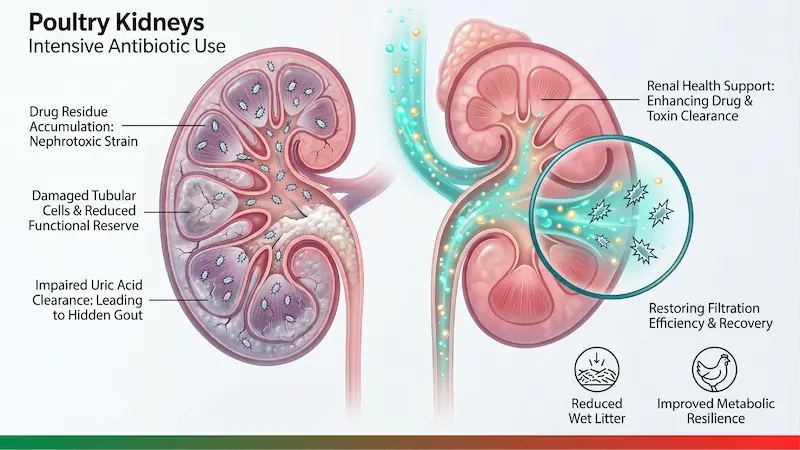
Antibiotics are powerful tools when used correctly, but in many poultry operations they are given for long periods, at high frequencies or in combinations that the kidneys must work hard to eliminate. Several classes of antibiotics, such as aminoglycosides and some others, are known to have nephrotoxic potential in animals when doses are high or courses are repeated, and they can accumulate in renal tissue and damage tubular cells. Even when clinical kidney failure is not obvious, a flock exposed to months of massive antibiotic use carries an increased renal burden, with reduced capacity to deal with uric acid and other metabolic wastes. This hidden stress can contribute to gout, wet litter and poor performance that is often blamed on diet or infection alone. In such scenarios, rational antibiotic stewardship is essential, and at the same time the flock benefits from poultry renal health support that helps the kidneys clear drugs and toxins more efficiently and recover their functional reserve.
Viral hits on the kidneys
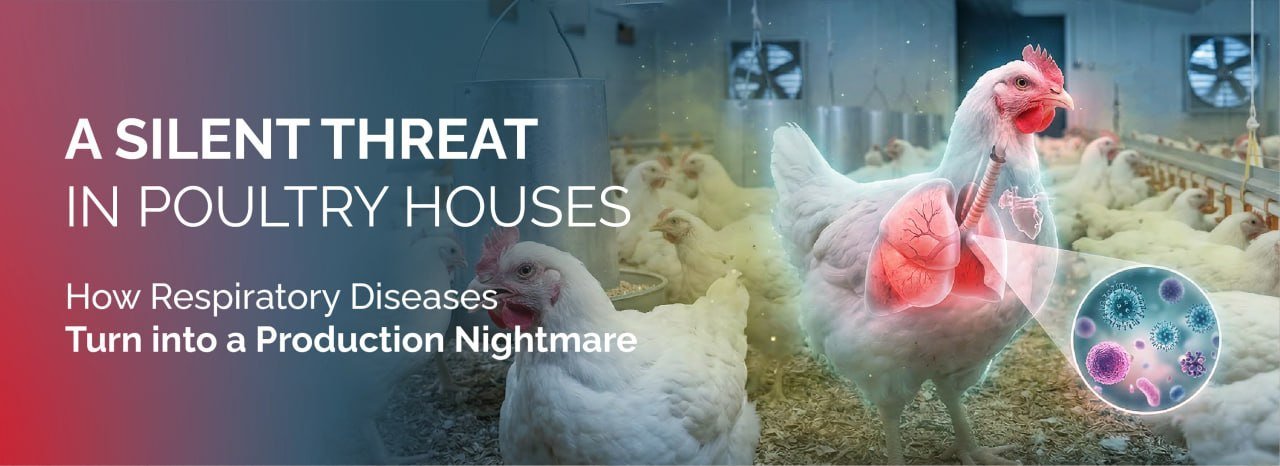
Some viral diseases do not stop at their primary target organs and can extend their damage to the kidneys in a way that amplifies flock losses. Infectious bursal disease, or Gumboro, primarily attacks the bursa and immune system, yet many field cases and pathological reports describe associated nephrosis and urate deposition in the kidneys during outbreaks. Nephropathogenic strains of infectious bronchitis virus have an even more direct effect on the renal tissue, causing swelling, pale and mottled kidneys, excessive urates in the ureters and increased water intake with wet droppings. These lesions alter the ability of the kidneys to concentrate and excrete uric acid properly and often lead to mortality that continues even after the peak of respiratory or bursal signs has passed. When such viruses circulate in a flock, classical control measures such as vaccination and biosecurity are only part of the answer, because the damaged organs also need targeted poultry renal health support to flush urates, reduce inflammation and help birds regain normal kidney function.
Why every flock now needs proactive poultry renal health support
Modern poultry production pushes birds to their genetic limits in growth and egg output, while exposing them to heat waves, complex vaccination programs and frequent medication, which all converge on the kidneys as a common bottleneck. Waiting until gout, high mortality or overt kidney lesions appear means that a significant part of the economic damage has already occurred and is difficult to reverse within the same cycle. A proactive approach combines good house management, careful drug use and vaccination planning with nutritional strategies designed to provide continuous poultry renal health support, especially during known risk periods. By protecting the kidneys, producers are in fact protecting the return on investment in genetics, feed and health programs and safeguarding flock performance against hidden losses. This is why more veterinarians and integrators are looking for specialized poultry renal health support tools, and in the next article we will present how ADEMIXvet solutions can be integrated into practical field protocols, so we invite you to follow our upcoming content and stay connected with our technical team for tailored kidney support programs for your flocks.