
Blog
When the Rumen Is Out of Balance… How Hidden Digestive Problems Steal Milk and Meat from Your Herd

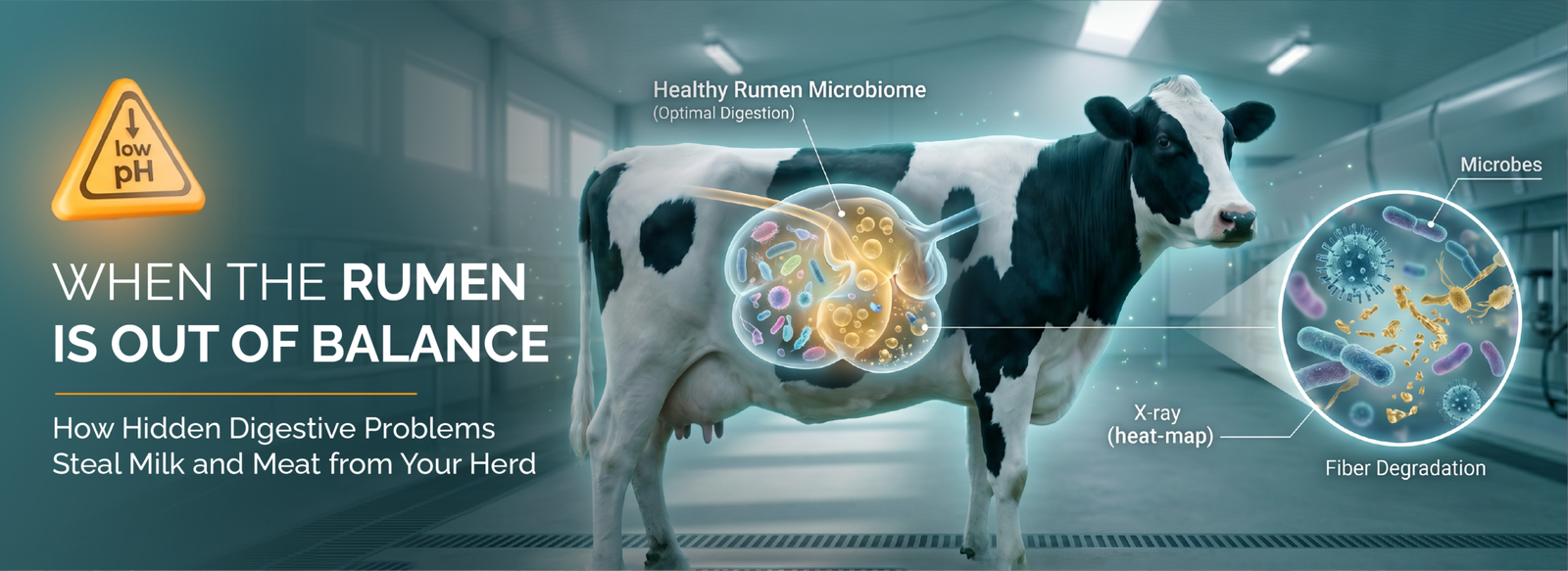
The rumen as the hidden engine of dairy and beef herds
The rumen is the real engine of the cow, long before milk goes into the tank or carcass weight shows on the scale. Inside this fermentation chamber, billions of microbes break down fiber, convert concentrates into energy and produce volatile fatty acids that drive milk production and growth. When this system works smoothly, rumen health and performance translate directly into higher yield, better condition and more profitable animals. When it is disturbed, the first signs are often subtle, such as changes in manure or chewing behavior, yet the financial impact can quietly grow from day to day.
High grain diets and the risk of subacute ruminal acidosis
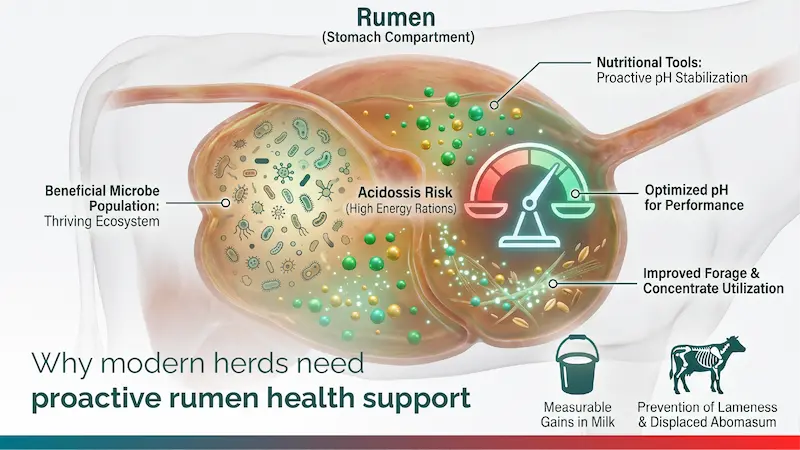
Modern dairy and beef systems rely heavily on concentrates to meet high energy demands, but this can push the rumen close to its limits. High grain diets or rapidly increased concentrate feeding encourage fast fermentation of starch, leading to excess acid production and episodes of low rumen pH that may not be obvious on clinical examination. This condition, known as subacute ruminal acidosis, does not always cause dramatic bloat or downer cows, yet it repeatedly depresses rumen health and performance throughout the day. Over time, these acid swings damage the rumen wall, alter the microbial population and reduce fiber digestion, leaving a large part of the ration underutilized.
From loose manure to low milk fat… the real cost of poor rumen health and performance
Producers often notice loose manure, undigested grain in the faeces, fluctuating appetite or a drop in cud chewing before they recognize that the rumen itself is under stress. In dairy cows, suboptimal rumen health and performance can lead to milk fat depression, reduced milk yield and increased incidence of laminitis and lameness, all of which are linked to acid load and endotoxin release from the rumen. In beef cattle, poor rumen function shows slower weight gain, more variable growth and a higher risk of digestive upsets that may require costly interventions. The herd may look healthy at a distance, yet feed efficiency is quietly decreasing and the cost per liter of milk or kilogram of gain is rising. These losses are often bigger than the visible cost of any single disease, which is why focusing on rumen health and performance is one of the most effective ways to recover hidden profit.
Heat stress, reduced rumination and unstable rumen fermentation
Heat stress adds another layer of challenge for the rumen, especially in high producing cows. When temperatures rise, cows eat less, change their feeding pattern and spend more time standing and panting, which all reduces saliva production and natural buffering of rumen pH. Studies have shown that under heat stress, both dairy and beef cattle can experience shifts in rumen microbiota, with less favorable fermentation patterns and increased risk of acidosis, even when the ration has not changed. As a result, rumen health and performance decline further, milk components drop and body condition may deteriorate despite high quality feed on paper. Managing shade, ventilation and cooling is essential, but it is also important to support the rumen itself during hot periods so that it can maintain stable fermentation and fiber digestion.
Why modern herds need proactive rumen health support
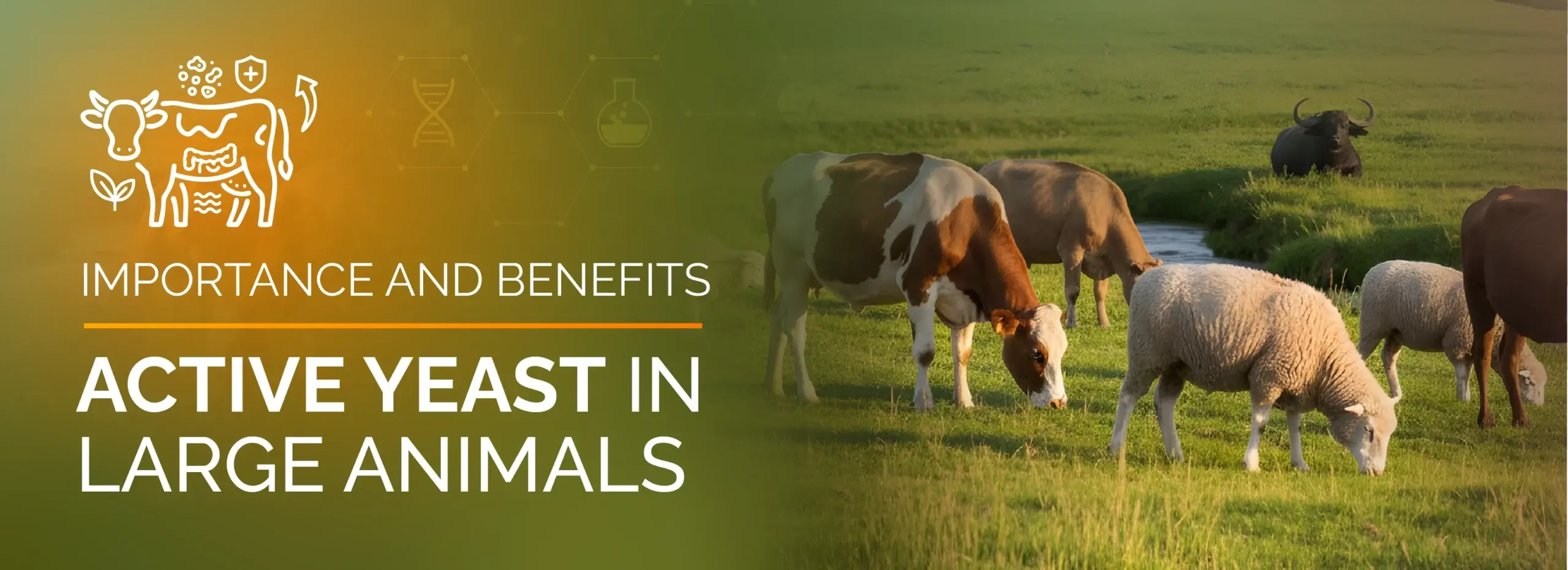
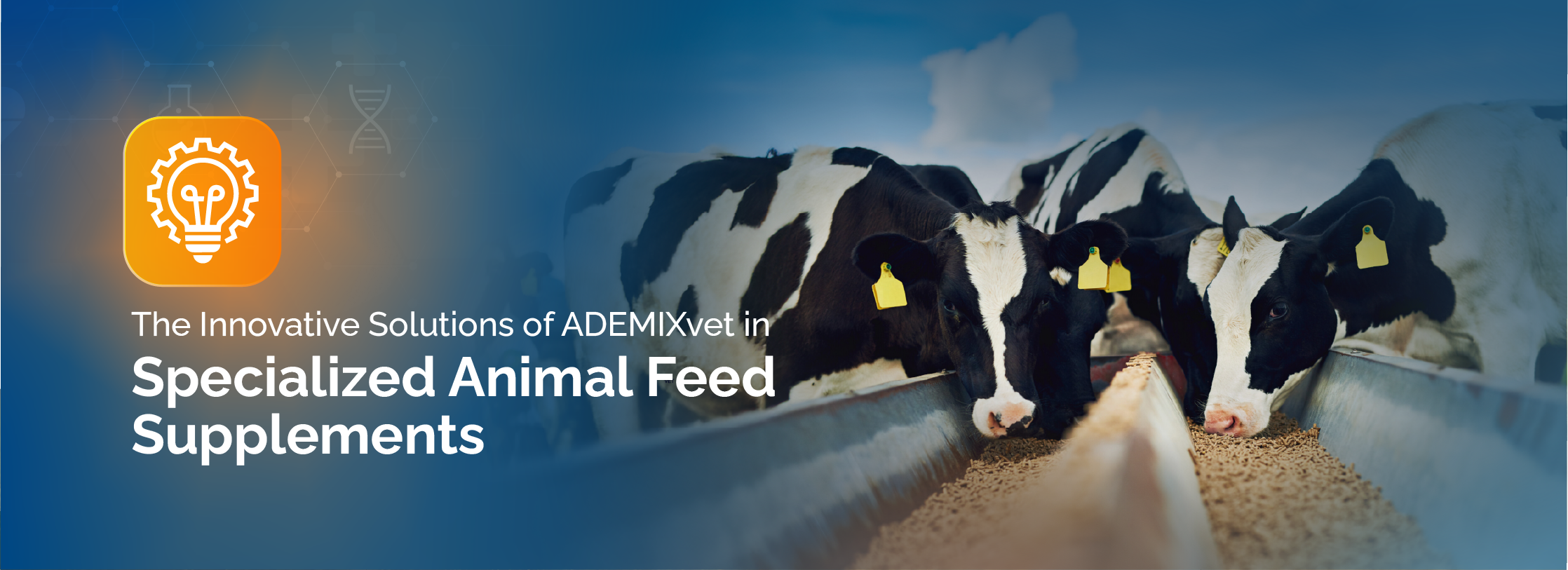
Intensive dairy and beef operations walk a fine line between high performance and digestive instability, especially when using energy dense rations and pushing animals close to their genetic potential. Waiting until cows show severe acidosis, displaced abomasum or obvious lameness means that rumen health and performance have been compromised for a long time and valuable production has already been lost. A proactive strategy includes careful ration design, smooth changes in concentrates levels, good fiber structure and regular monitoring of manure and behavior, combined with nutritional tools that provide ongoing rumen health support. Live yeast and other targeted additives have been shown to help stabilize pH, encourage beneficial microbes and improve utilization of both forage and concentrates, which turns better rumen health and performance into measurable gains in milk and meat. In the next step, selecting a reliable rumen health support solution and integrating it into herd protocols can help producers turn this hidden engine back into a consistent source of profit, and in the upcoming article we will present how ADEMIXvet yeast based solutions can be used in practical field programs, so we invite you to follow our technical content, explore our products and contact us if you would like to implement customized rumen health support plans or become our distribution partner in your region.