
Blog
Viral respiratory diseases in poultry

Understanding respiratory challenges in poultry
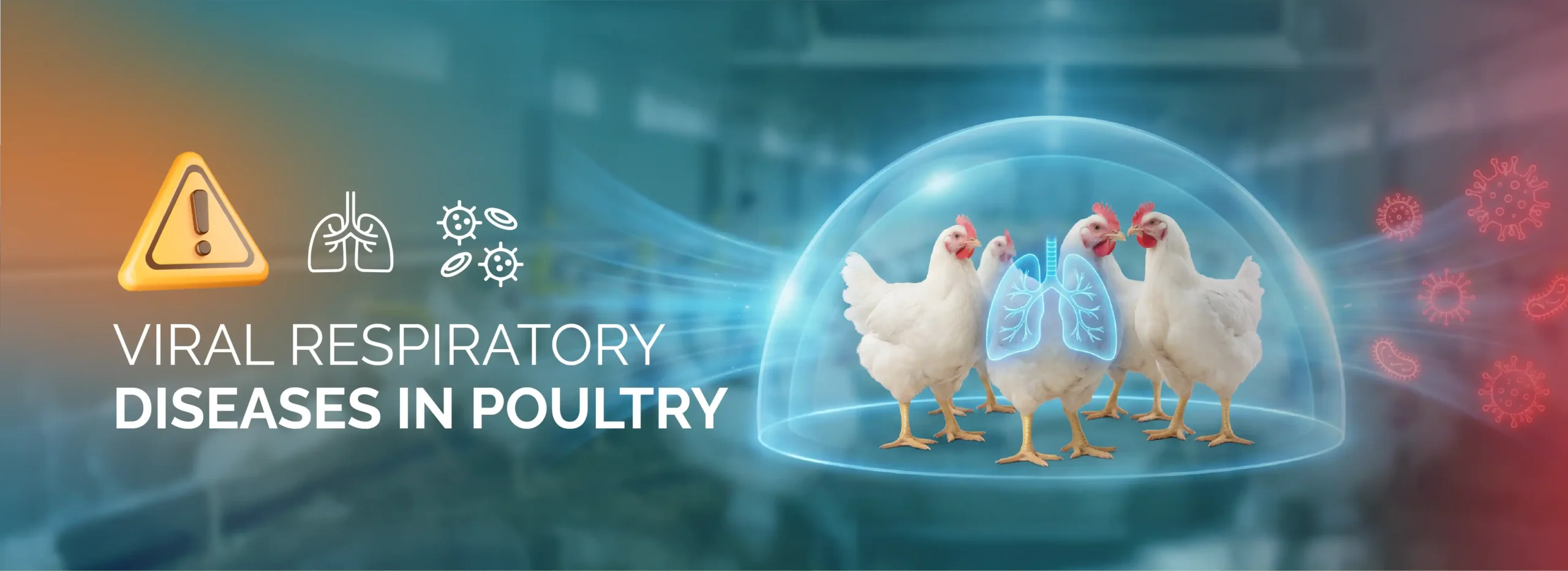
Respiratory problems have become one of the most serious daily challenges in modern poultry production, whether in broilers, breeders, or layers, and Viral respiratory diseases in poultry sit at the center of this struggle. Viral respiratory diseases rarely appear alone; they usually interact with bacterial agents like E. coli and Mycoplasma to form a complex that is difficult to control and slow to recover. Farmers often first notice coughing, sneezing, rattling sounds, birds huddling near heaters, and a clear drop in feed and water intake, but the real root cause is usually Viral respiratory diseases combined with weak farm management. In many houses, the picture becomes worse in winter, when sudden cold waves, high humidity, and poor ventilation encourage the spread and severity of Viral respiratory diseases in poultry. Closing houses tightly to “save heat” allows ammonia levels to climb, further damaging the respiratory lining and making Viral diseases in poultry more aggressive. This article is designed to give poultry producers a clear view of the problem and to show why getting control over Viral respiratory diseases in poultry is now a key step for any farm that wants sustainable performance and profit.
How respiratory infections start and spread
Once the pathogen enters the flock, Viral respiratory diseases in poultry start at the level of the upper airways, where viruses and bacteria land on the mucosal surface and try to break through the first defense line. Under normal conditions, cilia and mucus form a powerful mucociliary barrier that traps particles and pushes them out of the respiratory tract, limiting the impact of Viral respiratory diseases in poultry. When cold stress, excessive humidity, and high ammonia slow down ciliary movement and damage epithelial cells, the door opens wide for Viral respiratory diseases to penetrate deeper. At the same time, if mucosal immunity is weak due to poor vaccination programs, nutritional gaps, or chronic stress, even a small infectious dose can trigger significant Viral respiratory diseases in poultry outbreaks. Management mistakes, such as switching on heaters only a few hours before chick placement, keeping litter cold and damp, or mixing flocks of different ages; turn a limited infection into a house-wide problem. Understanding this disease pathway helps producers recognize that early intervention and better daily routines are essential to reduce the severity and speed of spread of respiratory diseases in poultry.
When respiratory disease becomes a financial problem
The impact of Viral respiratory diseases in poultry does not stop at visible respiratory signs; it directly hits growth, efficiency, and flock uniformity where profits are made or lost. In broilers, Viral respiratory diseases often lead to uneven body weights, reduced average daily gain, and a higher feed conversion ratio, meaning more feed is consumed to produce each kilogram of meat. Prolonged disease pressure can delay marketing age by several days, which increases total costs and reduces the financial margin per bird in every cycle. In breeders and layers, Viral respiratory diseases in poultry can depress egg production, weaken shell quality, and increase the proportion of cracked, dirty, or non-hatchable eggs over weeks. On top of this, producers face hidden costs: more medications and labor, disrupted vaccination schedules, and a higher risk of cross-infection between houses and sites as Viral respiratory diseases move through the production system. For any serious poultry business, controlling Viral respiratory diseases in poultry is not an optional luxury but a core economic strategy to protect margins in a competitive market.
Key factors that trigger respiratory outbreaks
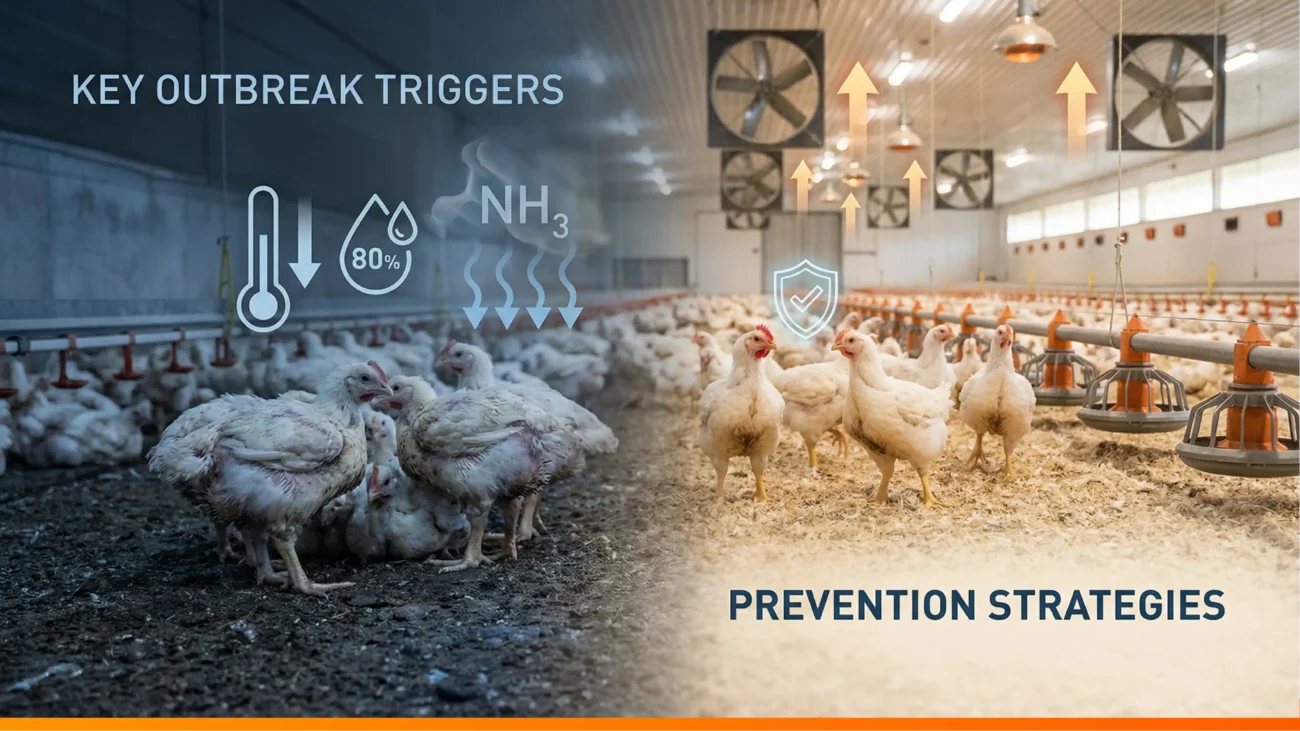
Behind every outbreak, there is usually a combination of predisposing factors that make Viral respiratory diseases in poultry much harder to avoid and much tougher to control. Sudden drops in temperature, wet or compacted litter, high relative humidity, and poor air exchange all weaken the respiratory defenses and raise the risk that Viral respiratory diseases in poultry will take hold. Ammonia levels that are allowed to climb due to weak ventilation irritate the airways, damage cilia, and make vaccines less effective, increasing flock susceptibility to Viral respiratory diseases in poultry. Practical prevention starts long before the birds arrive: pre-heating the house, securing a warm and dry litter bed, ensuring even temperature distribution, and maintaining a balance between ventilation and heat retention are all crucial steps. A well-planned vaccination program, tailored with a poultry veterinarian, strengthens local and systemic immunity so that Viral respiratory diseases face a prepared immune system instead of a vulnerable flock. Biosecurity, controlled stocking density, and consistent daily observation complete a holistic approach that transforms Viral respiratory diseases in poultry from a constant threat into a manageable risk.
Turning respiratory challenges into controlled risk
When we bring all these elements together, it becomes clear that Viral respiratory diseases in poultry are the result of an interaction between pathogens, environment, and management, not just a single virus or a single cold night. Farms that recognize this bigger picture are the ones that succeed in turning Viral respiratory diseases in poultry into a challenge they can predict, reduce, and control. Smart producers combine strong management and vaccination with targeted respiratory and immune-support programs to help birds cope with seasonal pressure and maintain performance. Within the ADEMIXvet portfolio, solutions such as LECTOMIX PLUS for respiratory support, OREGA MIX for gut–lung axis protection, IMMUNSTAR for immune reinforcement, RESPIMIX for organ support become powerful allies in seasons when Viral respiratory diseases peak, and BITKI POWER which offers an herbal expectorant and broncho dilatory boost, helping birds clear mucus and breathe easier during periods of intense respiratory challenge in poultry flocks. To discover how these and other ADEMIXvet solutions can be integrated into your own farm program, we invite you to explore our full poultry portfolio online, connect with our technical team, and take the next step to Be Our Agent in your region.